iGaming | 19 November 2026
Every gambler eventually has the same conversation with themselves. It usually happens around 2 a.m., after a brutal session at the blackjack table or a slot machine that swallowed six hundred spins without so much as a free game. "Is this even beatable?" The answer is more interesting than the tired old line about the house always winning. Some games are almost pure luck. Others are chess matches dressed in felt and chips. Knowing which side of that line you're standing on changes everything about how you should bet.
The Luck-to-Skill Spectrum, Explained Properly
Casino games don't split neatly into "luck" and "skill." They sit on a spectrum, and where a game lands on that spectrum determines everything: your strategy, your bankroll, and whether you should even sit down.
At the far luck end you have games like roulette, keno, and most modern video slots. On a single-number roulette bet, the house edge is 5.26% on a double-zero wheel and 2.7% on a European wheel, and no amount of concentration or pattern-spotting changes that. Slots are similar, with RTPs that typically fall between 92% and 97% depending on the machine and jurisdiction, and the only real decision you control is how much you wager and when you walk away.
At the other end sit games where your decisions genuinely move the needle. Blackjack with basic strategy drops the house edge to roughly 0.5%, and a skilled card counter on a six-deck shoe game can push that number into player-favorable territory. Poker isn't even in the same universe. Against other players, not the house, a strong regular will win over thousands of hands while a weak one bleeds out.
Where Each Popular Game Actually Falls
Here's a rough ranking from mostly luck to mostly skill, with the reasoning that matters:
- Keno and lottery-style games: Pure luck. House edges of 25% or more. Zero decisions after you buy the ticket.
- Slots: Almost entirely luck. You choose bet size and volatility, but the reels are independent of everything you do.
- Roulette: Luck with one tiny wrinkle: choosing European over American wheels cuts the house edge nearly in half.
- Baccarat: Luck, but betting on Banker instead of Player reduces the house edge from 1.24% to 1.06%. That's the entire skill component.
- Craps: Pass and come bets are near-pure luck; odds bets are the sharpest wagers in any casino because they carry no house edge at all.
- Blackjack: Genuine skill. Strategy errors cost real money. A counter who misplays one hand can undo hours of edge.
- Poker and sports betting: Skill-dominant. Long-run winners exist here in ways they simply don't at the slot floor.
That list isn't trivia. It's a roadmap. If you want entertainment, low-skill games deliver it efficiently. If you want to grind an edge, you need to be in the bottom half of that list.
Why Slots Still Deserve Respect
Plenty of experienced players dismiss slots as "not real gambling," which misses the point. Modern slots are engineered entertainment with mathematically fixed outcomes, and treating them that way is the only sane approach. You're not playing against a dealer who can be read or a field of opponents who can be outplayed. You're renting excitement at a known price.
Volatility matters more than most people realize. A high-volatility slot might pay out 97% RTP but deliver it in rare, huge bursts, meaning a 200-spin session can easily end in a wipeout. A low-volatility machine spreads smaller wins more regularly. Neither is better, but they demand different bankrolls. If you're sitting down with $100, a high-volatility slot is a coin flip against busting fast, while a low-volatility one might keep you spinning for an hour. Those comparing choices often turn to สล็อตเว็บตรง.
One practical tip: check the RTP disclosure on the game's info screen. Many jurisdictions require it. Two slots can look identical and differ by four percentage points, and over a few thousand spins that gap is the difference between a small loss and a painful one.
Blackjack: Where the Skill Actually Lives
If there's a single game where a casual player can most quickly close the gap with the house, it's blackjack. Memorizing basic strategy takes a weekend and immediately lowers the house edge from around 2% or more (for a clueless player) to about 0.5% on a typical six-deck game with decent rules.
Here's what that looks like in practice for one common situation: you have a hard 16 and the dealer shows a 10. Hitting feels suicidal, but the math says stand only at 16 against a dealer's 2 through 6. Against a 10, you hit. Players who "trust their gut" here give away more edge than they ever realize.
Beyond basic strategy sits card counting, which isn't the rain-man fantasy Hollywood sells. It's arithmetic and discipline. You track a running count, convert it to a true count by dividing by decks remaining, and adjust your bets accordingly. It works, it's legal in most places, and casinos will still back you off for doing it. That tells you something about how much they respect skill when it's actually present.
The Bankroll Rules Nobody Follows
Whichever game you choose, bankroll management separates recreational players from perpetual frustrates. A few non-negotiables:
- Decide your session bankroll before you sit down, and split it into at least 20 betting units if you're on slots.
- For blackjack, bet 1% to 2% of your total bankroll per hand at most. Variance eats anyone betting 10%.
- Set a stop-loss you actually honor. Walking away down $200 is a win compared to chasing back to even and losing $800.
- Never chase free spins or bonus offers without reading the playthrough requirements. A 40x wagering requirement on a 95% RTP slot is often a losing proposition.
- Keep a simple log of buy-ins and cash-outs. Month-end numbers are brutally honest in a way your memory never is.
Poker Is a Different Animal Entirely
In a poker room, the house takes a rake and steps out of the way. That means the money flows between players, and the better decision-maker simply wins over time. That's why poker has produced genuine professionals while slot floors never will.
The catch is that poker skill requires far more than knowing hand rankings. Position, pot odds, bet sizing, player tendencies, and emotional control all compound into a long-run edge. A player who understands that under-the-gun raises should be tighter than button raises, and that calling a river bet with a marginal hand is often the worst play on the table, will beat the average home-game player within a few sessions.
What This Means for How You Play
Stop asking whether gambling is beatable and start asking which games reward the effort. If you love the thrill of the spin and can accept it's a paid experience, play slots with a clear budget and enjoy them for what they are. If you want to test yourself against genuine odds, learn basic strategy, then counting, then move to poker where the ceiling is actually high. The house edge isn't fate. It's a number, and numbers respond to preparation. The players who understand that distinction don't win every session, but they lose less, last longer, and treat the whole enterprise as what it should be: a sharp, honest contest between your decisions and the math.


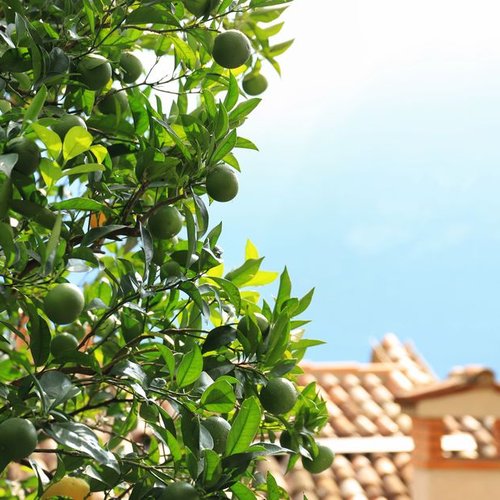





























Overwatering kills more indoor citrus trees than cold, pests, or neglect combined, so here is how to read your tree and your soil before you reach for the can.
Alice Rose
Sep 5, 2026 at 3:12 pm